What Is the Best Sand for a Volleyball Court in South Bay and San Francisco?

Home Icon
Contractor X
January 7, 2026

Easy steps to create a color palette

Lorem ipsum dolor sit amet, consectetur adipiscing elit. Integer libero molestie gravida morbi aliquam, dui neque pharetra. Egestas accumsan, potenti pulvinar nisl a turpis sit sed vitae netus sed quis eget sed nunc ac faucibus lacus arcu aliquet lorem ut mauris amet tempor nunc sed cursus integer eget tellus in eu a est.

  • Neque sodales ut etiam sit amet nisl purus. Non tellus orci ac auctor.
  • Adipiscing elit ut aliquam purus sit amet. Viverra suspendisse potenti.
  • Mauris commodo quis imperdiet massa tincidunt nunc pulvinar.

What is a color palette?

Lorem ipsum dolor sit amet, consectetur adipiscing elit ac varius duis sed amet arcu pellentesque ipsum dui, pellentesque facilisis vitae feugiat dui vel quis consectetur sed aliquet platea nulla varius dignissim eget vel in nec nulla mauris at amet vitae pharetra id lectus rhoncus, erat sed.

Why defining interior color schemes is so important

Lorem ipsum dolor sit amet, consectetur adipiscing elit commodo risus eget feugiat amet pellentesque massa morbi in montes, pharetra id sagittis, sed. Id consequat nam egestas enim eu elementum sed at nibh.

  1. Neque sodales ut etiam sit amet nisl purus non tellus orci .
  2. Adipiscing elit ut aliquam purus sit amet viverra .
  3. Mauris commodo quis imperdiet massa tincidunt nunc.
  4. Adipiscing elit ut aliquam purus sit amet viverra suspendisse.

Why defining interior color schemes is so important

Nisi quis eleifend quam adipiscing vitae. Aliquet bibendum enim facilisis gravida neque. Velit euismod in pellentesque massa placerat. Volutpat lacus laoreet non curabitur gravida. Odio aenean sed adipiscing diam donec adipiscing tristique risus. Amet est placerat in egestas erat imperdiet sed euismod nisi.

What is your favorite color palette?

Eget lorem dolor sed viverra ipsum nunc aliquet bibendum. Felis donec et odio pellentesque diam volutpat commodo sed egestas. Aliquam sem fringilla ut morbi tincidunt augue interdum velit euismod. Eu tincidunt tortor aliquam nulla facilisi. Aenean sed adipiscing diam donec adipiscing. Ut lectus arcu bibendum at varius.

Many people overlook sand until problems arise: a hard court, unexpected scratches, or an off-feeling surface. These often trace back to the material. The right sand is crucial as it shapes the entire playing experience. In the Bay Area, where courts are used nearly all year, a poor material choice can become a long-term issue.

Before you place an order, it's important to understand what factors will influence the long-term quality and playability of your court. Choosing the correct volleyball sand in San Francisco from the start helps ensure consistent performance, better drainage, and a safer surface for players over time. 

Continue reading to learn more about the sand and make the right choice from the start.

The Surface Your Players Are On Affects Everything

Volleyball is different from most outdoor sports in one way: no shoes. Players are barefoot. Nothing separates their skin from the sand when they dive. Nothing but the material cushions their joints when they land. And nothing is forgiving about a surface built wrong. If you're starting from scratch, understanding how to find and build the perfect sand volleyball space can help you avoid common setup mistakes before they turn into long-term issues.

Players come off the court scraped up, and the material itself breaks down faster under traffic. Sand for a volleyball court needs to perform all season, not just at the start. It should absorb impact, support movement, drain after rain, and remain loose so the court is safe. Not every sand meets these criteria.

What to Actually Look for When Evaluating Sand

Most people shopping for volleyball sand ask the wrong questions. Price per ton, delivery timeline, and availability matter. But those are not where the decision should start. 

  • Start with particle size. The best range for volleyball is 0.5mm to 1.5mm. Smaller than that, the surface compacts fast and kicks up dust. Larger than that, the cushion drops off. Landings feel harder than they should. Bare feet notice the difference immediately.
  • Grain shape matters. Rounded grains are softer against skin, move naturally underfoot, and avoid locking together like angular ones. Construction sand is designed to compact and stay put, which is the opposite of what volleyball courts need. Players notice the difference with angular sand immediately.
  • Cleanliness matters too. Washed sand with low clay content drains after rain and stays loose over time. Clay holds moisture in uneven patches, causes the surface to harden, and, after a wet stretch, can make a court feel more like dirt than sand. Fines like silt and clay hold water, so the less you have, the better.

Not sure which sand specs will actually hold up on your court? 

Get Expert Help

South Bay Courts: Why Durability Is the First Conversation

Outdoor volleyball in the South Bay isn’t occasional; it’s a year-round, high-traffic activity. That sounds obvious, but it directly affects material choices. Mild temperatures and dry weather keep courts playable well into fall and winter, so the sand takes on wear that colder regions do not see.

For South Bay courts, material priorities shift. Softer sand that works for a short season wears out quickly hsure which sand specs will actually hold up o ere. Volleyball sand in South Bay needs to hold its shape and resist compaction, or problems show up fast.

Harder, more stable material lasts longer. It handles more traffic before the feel changes and does not need frequent topping up or replacement. The upfront cost difference usually evens out when you factor in maintenance.

Drainage matters too. South Bay winters can bring weeks of rain. Washed, low-clay sand drains in hours, keeping courts playable instead of shut down.

San Francisco Courts: Wind and Moisture Change the Math

San Francisco is its own thing. The wind is consistent. The fog is real. Temperatures stay cooler than most of the Bay Area for much of the year. For sand volleyball on San Francisco courts, these conditions impact which material holds up and which does not. That’s why it’s important to understand what materials are needed to build a pro-level volleyball court in San Francisco, where wind, moisture, and usage all influence material choices. 

The first challenge is moisture. Coastal air keeps humidity high, so sand that retains moisture stays heavy. A well-graded, washed material with minimal fines dries faster between sessions, important with frequent fog.

Wind is the next factor. San Francisco's wind blows away finer particles over time, leaving the court coarser and harder. Starting with medium-grain sand helps the surface resist erosion and play consistently.

Working With a Supplier Who Knows What They Are Selling

The Bay Area has good aggregate suppliers. This is a real advantage for local projects. Delivery costs are reasonable and lead times are short. Local suppliers understand what the climate asks of outdoor surfaces. It makes a difference.

Ask your supplier three key questions: Has the sand been washed? What is the particle size range? Has it been used for volleyball courts before? Experienced suppliers answer quickly; others might just sell general fill. A reliable supplier should be able to clearly explain whether their material meets tournament-grade volleyball sand standards or not. 

For both the volleyball sand in South Bay and San Francisco projects, a short conversation up front saves a longer one later when something is not performing the way it should.

Final Thoughts

Every dive, sprint, and landing in a volleyball game happens on the sand. It is not a background element. It is the court. The sand shapes how players move, how they feel at the end of the day, and how the surface lasts through a full season.

At Western Materials, we supply volleyball sand for courts across the South Bay and San Francisco. If you are building something new or replacing old material, we can help you figure out what you need and get it there. Whether it’s a sand volleyball court in San Francisco or a South Bay backyard setup, the goal is a court that plays well from the first game. It should keep playing well, not need fixing before the first season is done.

Want to build or upgrade a court? 

Request Volleyball Sand Quote

Frequently Asked Questions

Q: Does Western Materials supply sand for volleyball court projects in the South Bay and San Francisco? 

Yes. Western Materials supplies washed, screened volleyball-grade sand for both areas. We help figure out the right particle size and grain type for every setup: backyard courts, club facilities, and recreational parks. The goal is material that actually plays well, not just something that fits on a pallet.

Q: What separates volleyball sand from regular construction or play sand?

 Play sand is usually too fine. It compacts fast and loses its feel within a season. Construction sand is angular, which is hard on bare skin. It locks together and makes a court feel rigid. Volleyball sand is washed, rounded, and sized in the 0.5mm to 1.5mm range. That combination makes it safe and playable for people in direct contact with the surface all day.

Q: How deep does the sand need to be? 

Eighteen to twenty-four inches is standard for both recreational and competitive courts. That depth keeps the surface cushioned, loose, and consistent. Going shallower saves money at first, but costs more later when the surface compacts and plays hard ahead of schedule.

Q: When does volleyball court sand need to be replaced or topped up? 

A well-built court with quality material and regular raking can go three to five years before needing a serious refresh. High-traffic courts need attention sooner. The clearest signs are compaction near the net, reduced depth, and slow drainage. When you notice these, it is time to add material.

What Is the Best Sand for a Volleyball Court in South Bay and San Francisco?

Published on:

May 4, 2026
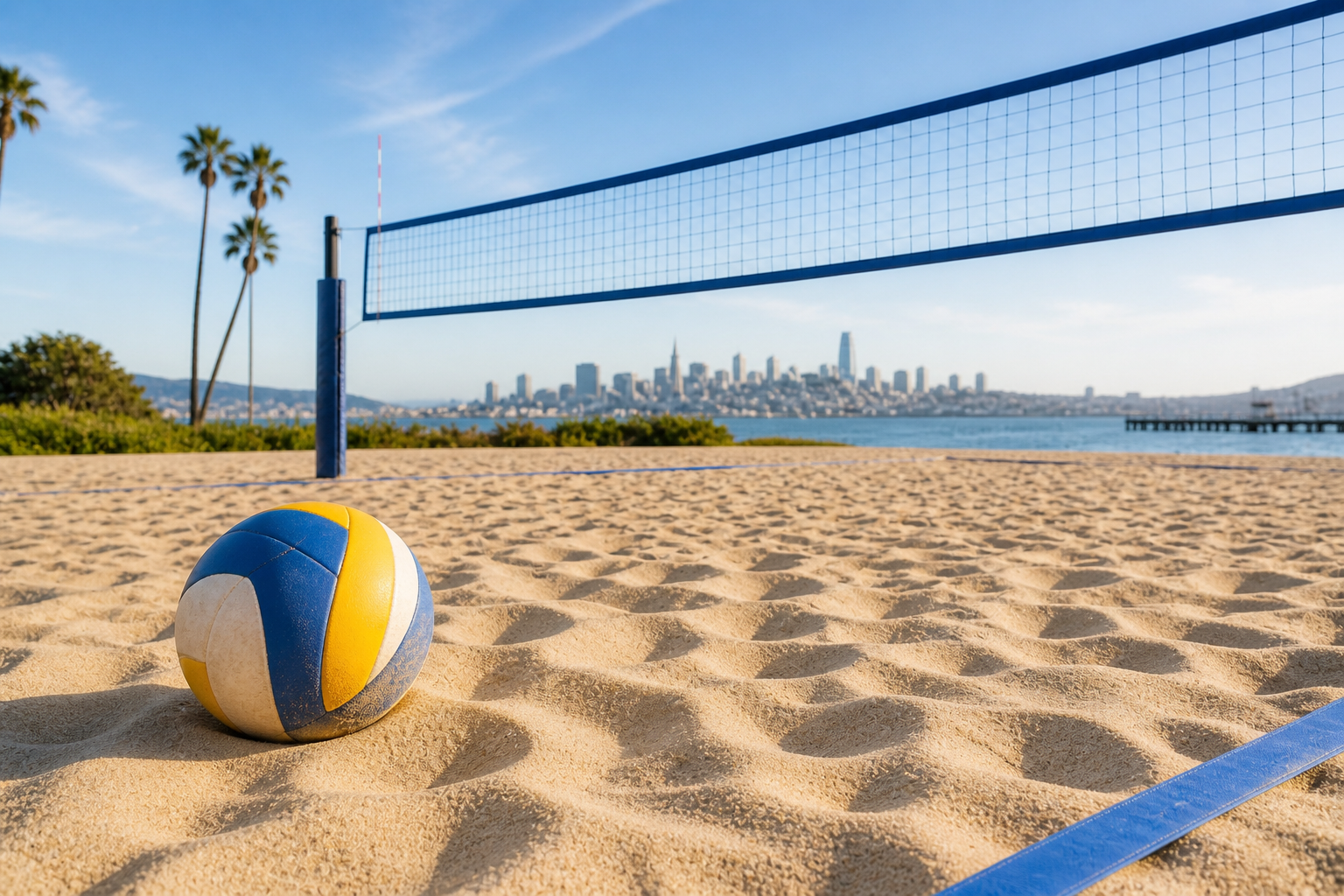
Best Sand for a Volleyball Court in South Bay and San Francisco

Many people overlook sand until problems arise: a hard court, unexpected scratches, or an off-feeling surface. These often trace back to the material. The right sand is crucial as it shapes the entire playing experience. In the Bay Area, where courts are used nearly all year, a poor material choice can become a long-term issue.

Before you place an order, it's important to understand what factors will influence the long-term quality and playability of your court. Choosing the correct volleyball sand in San Francisco from the start helps ensure consistent performance, better drainage, and a safer surface for players over time. 

Continue reading to learn more about the sand and make the right choice from the start.

The Surface Your Players Are On Affects Everything

Volleyball is different from most outdoor sports in one way: no shoes. Players are barefoot. Nothing separates their skin from the sand when they dive. Nothing but the material cushions their joints when they land. And nothing is forgiving about a surface built wrong. If you're starting from scratch, understanding how to find and build the perfect sand volleyball space can help you avoid common setup mistakes before they turn into long-term issues.

Players come off the court scraped up, and the material itself breaks down faster under traffic. Sand for a volleyball court needs to perform all season, not just at the start. It should absorb impact, support movement, drain after rain, and remain loose so the court is safe. Not every sand meets these criteria.

What to Actually Look for When Evaluating Sand

Most people shopping for volleyball sand ask the wrong questions. Price per ton, delivery timeline, and availability matter. But those are not where the decision should start. 

  • Start with particle size. The best range for volleyball is 0.5mm to 1.5mm. Smaller than that, the surface compacts fast and kicks up dust. Larger than that, the cushion drops off. Landings feel harder than they should. Bare feet notice the difference immediately.
  • Grain shape matters. Rounded grains are softer against skin, move naturally underfoot, and avoid locking together like angular ones. Construction sand is designed to compact and stay put, which is the opposite of what volleyball courts need. Players notice the difference with angular sand immediately.
  • Cleanliness matters too. Washed sand with low clay content drains after rain and stays loose over time. Clay holds moisture in uneven patches, causes the surface to harden, and, after a wet stretch, can make a court feel more like dirt than sand. Fines like silt and clay hold water, so the less you have, the better.

Not sure which sand specs will actually hold up on your court? 

Get Expert Help

South Bay Courts: Why Durability Is the First Conversation

Outdoor volleyball in the South Bay isn’t occasional; it’s a year-round, high-traffic activity. That sounds obvious, but it directly affects material choices. Mild temperatures and dry weather keep courts playable well into fall and winter, so the sand takes on wear that colder regions do not see.

For South Bay courts, material priorities shift. Softer sand that works for a short season wears out quickly hsure which sand specs will actually hold up o ere. Volleyball sand in South Bay needs to hold its shape and resist compaction, or problems show up fast.

Harder, more stable material lasts longer. It handles more traffic before the feel changes and does not need frequent topping up or replacement. The upfront cost difference usually evens out when you factor in maintenance.

Drainage matters too. South Bay winters can bring weeks of rain. Washed, low-clay sand drains in hours, keeping courts playable instead of shut down.

San Francisco Courts: Wind and Moisture Change the Math

San Francisco is its own thing. The wind is consistent. The fog is real. Temperatures stay cooler than most of the Bay Area for much of the year. For sand volleyball on San Francisco courts, these conditions impact which material holds up and which does not. That’s why it’s important to understand what materials are needed to build a pro-level volleyball court in San Francisco, where wind, moisture, and usage all influence material choices. 

The first challenge is moisture. Coastal air keeps humidity high, so sand that retains moisture stays heavy. A well-graded, washed material with minimal fines dries faster between sessions, important with frequent fog.

Wind is the next factor. San Francisco's wind blows away finer particles over time, leaving the court coarser and harder. Starting with medium-grain sand helps the surface resist erosion and play consistently.

Working With a Supplier Who Knows What They Are Selling

The Bay Area has good aggregate suppliers. This is a real advantage for local projects. Delivery costs are reasonable and lead times are short. Local suppliers understand what the climate asks of outdoor surfaces. It makes a difference.

Ask your supplier three key questions: Has the sand been washed? What is the particle size range? Has it been used for volleyball courts before? Experienced suppliers answer quickly; others might just sell general fill. A reliable supplier should be able to clearly explain whether their material meets tournament-grade volleyball sand standards or not. 

For both the volleyball sand in South Bay and San Francisco projects, a short conversation up front saves a longer one later when something is not performing the way it should.

Final Thoughts

Every dive, sprint, and landing in a volleyball game happens on the sand. It is not a background element. It is the court. The sand shapes how players move, how they feel at the end of the day, and how the surface lasts through a full season.

At Western Materials, we supply volleyball sand for courts across the South Bay and San Francisco. If you are building something new or replacing old material, we can help you figure out what you need and get it there. Whether it’s a sand volleyball court in San Francisco or a South Bay backyard setup, the goal is a court that plays well from the first game. It should keep playing well, not need fixing before the first season is done.

Want to build or upgrade a court? 

Request Volleyball Sand Quote

Frequently Asked Questions

Q: Does Western Materials supply sand for volleyball court projects in the South Bay and San Francisco? 

Yes. Western Materials supplies washed, screened volleyball-grade sand for both areas. We help figure out the right particle size and grain type for every setup: backyard courts, club facilities, and recreational parks. The goal is material that actually plays well, not just something that fits on a pallet.

Q: What separates volleyball sand from regular construction or play sand?

 Play sand is usually too fine. It compacts fast and loses its feel within a season. Construction sand is angular, which is hard on bare skin. It locks together and makes a court feel rigid. Volleyball sand is washed, rounded, and sized in the 0.5mm to 1.5mm range. That combination makes it safe and playable for people in direct contact with the surface all day.

Q: How deep does the sand need to be? 

Eighteen to twenty-four inches is standard for both recreational and competitive courts. That depth keeps the surface cushioned, loose, and consistent. Going shallower saves money at first, but costs more later when the surface compacts and plays hard ahead of schedule.

Q: When does volleyball court sand need to be replaced or topped up? 

A well-built court with quality material and regular raking can go three to five years before needing a serious refresh. High-traffic courts need attention sooner. The clearest signs are compaction near the net, reduced depth, and slow drainage. When you notice these, it is time to add material.