Silica Sand vs. Concrete Sand: Choosing the Right Sand for Construction Projects

Home Icon
Contractor X
August 22, 2024

Easy steps to create a color palette

Lorem ipsum dolor sit amet, consectetur adipiscing elit. Integer libero molestie gravida morbi aliquam, dui neque pharetra. Egestas accumsan, potenti pulvinar nisl a turpis sit sed vitae netus sed quis eget sed nunc ac faucibus lacus arcu aliquet lorem ut mauris amet tempor nunc sed cursus integer eget tellus in eu a est.

  • Neque sodales ut etiam sit amet nisl purus. Non tellus orci ac auctor.
  • Adipiscing elit ut aliquam purus sit amet. Viverra suspendisse potenti.
  • Mauris commodo quis imperdiet massa tincidunt nunc pulvinar.

What is a color palette?

Lorem ipsum dolor sit amet, consectetur adipiscing elit ac varius duis sed amet arcu pellentesque ipsum dui, pellentesque facilisis vitae feugiat dui vel quis consectetur sed aliquet platea nulla varius dignissim eget vel in nec nulla mauris at amet vitae pharetra id lectus rhoncus, erat sed.

Why defining interior color schemes is so important

Lorem ipsum dolor sit amet, consectetur adipiscing elit commodo risus eget feugiat amet pellentesque massa morbi in montes, pharetra id sagittis, sed. Id consequat nam egestas enim eu elementum sed at nibh.

  1. Neque sodales ut etiam sit amet nisl purus non tellus orci .
  2. Adipiscing elit ut aliquam purus sit amet viverra .
  3. Mauris commodo quis imperdiet massa tincidunt nunc.
  4. Adipiscing elit ut aliquam purus sit amet viverra suspendisse.

Why defining interior color schemes is so important

Nisi quis eleifend quam adipiscing vitae. Aliquet bibendum enim facilisis gravida neque. Velit euismod in pellentesque massa placerat. Volutpat lacus laoreet non curabitur gravida. Odio aenean sed adipiscing diam donec adipiscing tristique risus. Amet est placerat in egestas erat imperdiet sed euismod nisi.

What is your favorite color palette?

Eget lorem dolor sed viverra ipsum nunc aliquet bibendum. Felis donec et odio pellentesque diam volutpat commodo sed egestas. Aliquam sem fringilla ut morbi tincidunt augue interdum velit euismod. Eu tincidunt tortor aliquam nulla facilisi. Aenean sed adipiscing diam donec adipiscing. Ut lectus arcu bibendum at varius.

In the case of creating something solid and long-lasting, sand probably is the last thing that crosses your mind. Yet this couldn’t be more wrong because, depending on the kind of sand, your project might turn out to be a success or a failure. It is very important to know the difference between Silica Sand and concrete sand, no matter if you are mixing for a driveway or preparing a gentle ground for a patio.

So, which one to choose? Let us do a simple breakdown of it.

Why the Type of Sand Matters

The sand type is essential, as each particle of the respective size plays a unique and very important role. The smoothness, size of grains, and purity will determine the quality of the concrete setting up or how even your base will be. If the sand type used is wrong, it may cause different issues like cracks, uneven surfaces, and poor bonding very easily. That means more repairs and higher costs later.

So before you order that truckload, it’s worth understanding what goes into your mix.

What Is Silica Sand?

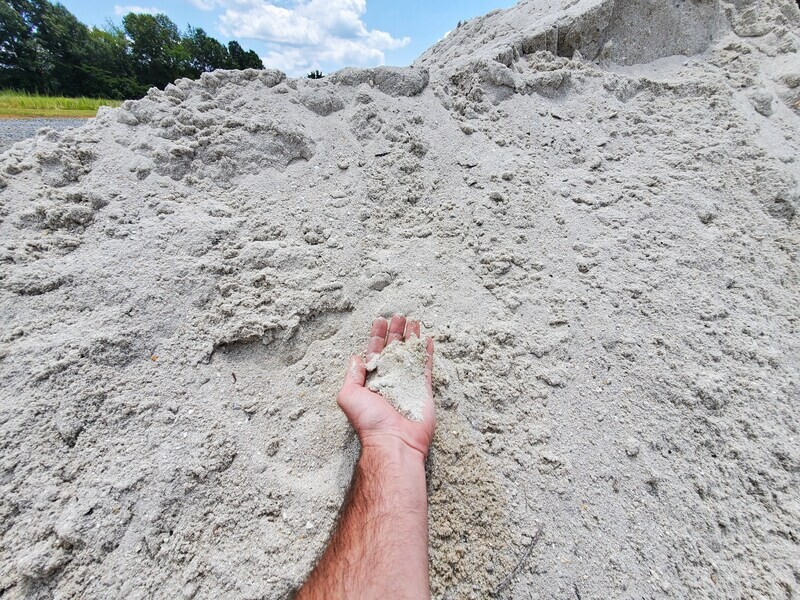
Silica Sand consists of silicon dioxide, SiO₂, the basic constituent of quartz. This makes it super pure and very uniform in texture. You'll most often see it in light beige or white shades.

It's generally used for:

  • Industrial purposes like glassmaking

  • Landscaping and turf infill

  • Water filtration systems

  • Used in construction mixtures wherever high strength and accuracy are required

Compared to other types of sand, silica sand is cleaner and finer. The grains are uniform in size, and this makes the finishes smoother. However, it is not always the best option for every type of construction.

What Is Concrete Sand?

Concrete sand is coarser and grittier. It’s made by crushing rocks, such as granite or limestone, which gives it rougher edges and a mix of grain sizes. This makes the perfect texture for any construction work as it helps in providing an excellent grip on concrete and also maximizes the overall strength.

Common uses include:

  • Concrete mixing

  • Laying pavers and bricks

  • Road base and leveling layers

  • Pool and patio foundations

Because it’s less refined, concrete sand also allows better drainage, which is a big plus for outdoor projects.

The Key Differences: Silica Sand vs. Concrete Sand

Let’s make this super simple. Here’s how the two compare:

Feature

Silica Sand

Concrete Sand

Grain texture

Smooth and even

Rough and varied

Color

Light beige/white

Gray or brownish

Drainage

Moderate

Excellent

Common uses

Industrial, landscaping, filtration

Concrete, pavers, foundations

Strength factor

Adds smoothness and finish

Adds bonding and stability

Cost

Usually higher

More budget-friendly

In short, Silica Sand is best for finishing and precision, while concrete sand is ideal for bulk construction and strength.

Which One Should You Use?

What you're constructing will dictate the choice of the material. In case durability is your main concern, then get concrete sand. It makes great bonds with cement and gravel, thereby giving your structure a solid foundation. This is the type of sand that is employed in making driveways, sidewalks, and large pours of concrete. 

If your work involves the use of a very smooth surface or a finer touch like plastering, making decorative works, or setting up water filtration, then Silica Sand could be your best choice. The purity and uniformity of the sand make a significant contribution to the attainment of a clean finish.

Common Mistakes People Make When Choosing Sand

  1. Thinking that all the sand is the same - It's not; each type has its role.

  2. Ignoring grain size – Coarse sand drains better; fine sand compacts better.

  3. Skipping material testing – For large projects, it’s smart to test the mix first.

  4. Not checking for local Availability – This may increase costs when one has to ship the sand from a distance.

Being aware of these small details can save you much time and money in the future.

Why Quality Matters More Than Quantity

The temptation to select a material by the lowest price is great, but in construction, an inexpensive material translates to expensive problems. Some of the common problems that occur with poor quality sand are weak concrete, uneven settlement, and erosion. Trustworthy suppliers who will tell you the exact source of their sand and the best use for it are the ones you should buy from.

Where to Get Reliable Construction Sand

If you are in California and need the best quality materials, Western Materials is the right place for you. Being in the business for more than 40 years, we provide a wide range of products, including the best Silica Sand and the roughest concrete sand, all of which are tested and delivered punctually. No matter if you are a contractor or a homeowner, our staff is always there to assist you in choosing the most suitable material for your work. From the construction of driveways to the installation of sports fields, we have been a reputable supplier of sand and gravel throughout the entire state.

Conclusion

The decision between Silica Sand and concrete sand won’t be complicated, as you have the basics backed up. If your priorities are smooth finish and detailed work, Silica Sand will help you readily; conversely, if your construction demands strength, stability, and durability, then concrete sand will be your option. 

The right sand not only integrates your project but also determines its quality, life span, and look. So, it is advisable to spend some time making a wise choice and letting your project bear the test of time for years.

FAQs: Silica Sand vs. Concrete Sand

1. Can I use Silica Sand for concrete? 

You can, but it's not ideal. Silica Sand is too fine and may weaken the mix intended for heavy-duty construction. 

2. Is concrete sand good to level patios? 

Yes, it does, as the coarse texture allows good drainage and forms a stable base for pavers and stones. 

3. Why is Silica Sand more expensive? 

It's purer and finer, often processed more carefully, raising its production cost. 

4. Is it possible to mix Silica Sand with concrete sand? 

Yes, for some applications, a mixture will work quite well when you want both smoothness and strength. 

5. In California, where do I go to get quality construction sand? 

You can source quality sands and gravels directly from Western Materials, who are trusted and experienced suppliers for several decades.

Silica Sand vs. Concrete Sand: Choosing the Right Sand for Construction Projects

Published on:

November 25, 2025

In the case of creating something solid and long-lasting, sand probably is the last thing that crosses your mind. Yet this couldn’t be more wrong because, depending on the kind of sand, your project might turn out to be a success or a failure. It is very important to know the difference between Silica Sand and concrete sand, no matter if you are mixing for a driveway or preparing a gentle ground for a patio.

So, which one to choose? Let us do a simple breakdown of it.

Why the Type of Sand Matters

The sand type is essential, as each particle of the respective size plays a unique and very important role. The smoothness, size of grains, and purity will determine the quality of the concrete setting up or how even your base will be. If the sand type used is wrong, it may cause different issues like cracks, uneven surfaces, and poor bonding very easily. That means more repairs and higher costs later.

So before you order that truckload, it’s worth understanding what goes into your mix.

What Is Silica Sand?

Silica Sand consists of silicon dioxide, SiO₂, the basic constituent of quartz. This makes it super pure and very uniform in texture. You'll most often see it in light beige or white shades.

It's generally used for:

  • Industrial purposes like glassmaking

  • Landscaping and turf infill

  • Water filtration systems

  • Used in construction mixtures wherever high strength and accuracy are required

Compared to other types of sand, silica sand is cleaner and finer. The grains are uniform in size, and this makes the finishes smoother. However, it is not always the best option for every type of construction.

What Is Concrete Sand?

Concrete sand is coarser and grittier. It’s made by crushing rocks, such as granite or limestone, which gives it rougher edges and a mix of grain sizes. This makes the perfect texture for any construction work as it helps in providing an excellent grip on concrete and also maximizes the overall strength.

Common uses include:

  • Concrete mixing

  • Laying pavers and bricks

  • Road base and leveling layers

  • Pool and patio foundations

Because it’s less refined, concrete sand also allows better drainage, which is a big plus for outdoor projects.

The Key Differences: Silica Sand vs. Concrete Sand

Let’s make this super simple. Here’s how the two compare:

Feature

Silica Sand

Concrete Sand

Grain texture

Smooth and even

Rough and varied

Color

Light beige/white

Gray or brownish

Drainage

Moderate

Excellent

Common uses

Industrial, landscaping, filtration

Concrete, pavers, foundations

Strength factor

Adds smoothness and finish

Adds bonding and stability

Cost

Usually higher

More budget-friendly

In short, Silica Sand is best for finishing and precision, while concrete sand is ideal for bulk construction and strength.

Which One Should You Use?

What you're constructing will dictate the choice of the material. In case durability is your main concern, then get concrete sand. It makes great bonds with cement and gravel, thereby giving your structure a solid foundation. This is the type of sand that is employed in making driveways, sidewalks, and large pours of concrete. 

If your work involves the use of a very smooth surface or a finer touch like plastering, making decorative works, or setting up water filtration, then Silica Sand could be your best choice. The purity and uniformity of the sand make a significant contribution to the attainment of a clean finish.

Common Mistakes People Make When Choosing Sand

  1. Thinking that all the sand is the same - It's not; each type has its role.

  2. Ignoring grain size – Coarse sand drains better; fine sand compacts better.

  3. Skipping material testing – For large projects, it’s smart to test the mix first.

  4. Not checking for local Availability – This may increase costs when one has to ship the sand from a distance.

Being aware of these small details can save you much time and money in the future.
Why Quality Matters More Than Quantity

The temptation to select a material by the lowest price is great, but in construction, an inexpensive material translates to expensive problems. Some of the common problems that occur with poor quality sand are weak concrete, uneven settlement, and erosion. Trustworthy suppliers who will tell you the exact source of their sand and the best use for it are the ones you should buy from.

Where to Get Reliable Construction Sand

If you are in California and need the best quality materials, Western Materials is the right place for you. Being in the business for more than 40 years, we provide a wide range of products, including the best Silica Sand and the roughest concrete sand, all of which are tested and delivered punctually. No matter if you are a contractor or a homeowner, our staff is always there to assist you in choosing the most suitable material for your work. From the construction of driveways to the installation of sports fields, we have been a reputable supplier of sand and gravel throughout the entire state.

Conclusion

The decision between Silica Sand and concrete sand won’t be complicated, as you have the basics backed up. If your priorities are smooth finish and detailed work, Silica Sand will help you readily; conversely, if your construction demands strength, stability, and durability, then concrete sand will be your option. 

The right sand not only integrates your project but also determines its quality, life span, and look. So, it is advisable to spend some time making a wise choice and letting your project bear the test of time for years.

FAQs: Silica Sand vs. Concrete Sand

1. Can I use Silica Sand for concrete? 

You can, but it's not ideal. Silica Sand is too fine and may weaken the mix intended for heavy-duty construction. 

2. Is concrete sand good to level patios? 

Yes, it does, as the coarse texture allows good drainage and forms a stable base for pavers and stones. 

3. Why is Silica Sand more expensive? 

It's purer and finer, often processed more carefully, raising its production cost. 

4. Is it possible to mix Silica Sand with concrete sand? 

Yes, for some applications, a mixture will work quite well when you want both smoothness and strength. 

5. In California, where do I go to get quality construction sand? 

You can source quality sands and gravels directly from Western Materials, who are trusted and experienced suppliers for several decades.