Where Does Medium-Size Gravel Work Best in Landscaping & Drainage Projects?

Home Icon
Contractor X
August 22, 2024

Easy steps to create a color palette

Lorem ipsum dolor sit amet, consectetur adipiscing elit. Integer libero molestie gravida morbi aliquam, dui neque pharetra. Egestas accumsan, potenti pulvinar nisl a turpis sit sed vitae netus sed quis eget sed nunc ac faucibus lacus arcu aliquet lorem ut mauris amet tempor nunc sed cursus integer eget tellus in eu a est.

  • Neque sodales ut etiam sit amet nisl purus. Non tellus orci ac auctor.
  • Adipiscing elit ut aliquam purus sit amet. Viverra suspendisse potenti.
  • Mauris commodo quis imperdiet massa tincidunt nunc pulvinar.

What is a color palette?

Lorem ipsum dolor sit amet, consectetur adipiscing elit ac varius duis sed amet arcu pellentesque ipsum dui, pellentesque facilisis vitae feugiat dui vel quis consectetur sed aliquet platea nulla varius dignissim eget vel in nec nulla mauris at amet vitae pharetra id lectus rhoncus, erat sed.

Why defining interior color schemes is so important

Lorem ipsum dolor sit amet, consectetur adipiscing elit commodo risus eget feugiat amet pellentesque massa morbi in montes, pharetra id sagittis, sed. Id consequat nam egestas enim eu elementum sed at nibh.

  1. Neque sodales ut etiam sit amet nisl purus non tellus orci .
  2. Adipiscing elit ut aliquam purus sit amet viverra .
  3. Mauris commodo quis imperdiet massa tincidunt nunc.
  4. Adipiscing elit ut aliquam purus sit amet viverra suspendisse.

Why defining interior color schemes is so important

Nisi quis eleifend quam adipiscing vitae. Aliquet bibendum enim facilisis gravida neque. Velit euismod in pellentesque massa placerat. Volutpat lacus laoreet non curabitur gravida. Odio aenean sed adipiscing diam donec adipiscing tristique risus. Amet est placerat in egestas erat imperdiet sed euismod nisi.

What is your favorite color palette?

Eget lorem dolor sed viverra ipsum nunc aliquet bibendum. Felis donec et odio pellentesque diam volutpat commodo sed egestas. Aliquam sem fringilla ut morbi tincidunt augue interdum velit euismod. Eu tincidunt tortor aliquam nulla facilisi. Aenean sed adipiscing diam donec adipiscing. Ut lectus arcu bibendum at varius.

At​‍​‌‍​‍‌​‍​‌‍​‍‌ Western Materials, we frequently witness the struggles of people to choose the right gravel. In fact, it is not really complicated, but it is felt to be that way. One might stare at a heap of stones and consider them all identical. However, they are not. Both 1/2" gravel and pea gravel are of medium size, but they differ a lot in their performance. If you select the wrong one, you will immediately experience it: the paths that sink, the surfaces that shift, or the drainage that does not work. 

We have been serving contractors, landscapers, and homeowners in California for more than 40 years. During that time, we have figured out what is effective and what is not, and thus, we are willing to make it easy for you. One of those neglected options, which is actually extremely adaptable, is the medium-sized gravel. It is compatible with almost all environments, it is strong enough to sustain the wear and tear of the traffic, and it heats water to flow in the required manner.

Why Medium-Size Gravel Is a Solid Choice?

Medium-sized gravel is the perfect choice. It is neither too small nor too big. Small enough to be handled but large enough to be left alone. That equilibrium makes it feasible for numerous projects. Apart from not getting dispersed here and there, it also allows water to soak through easily, and it is less in need of care. You are not obligated to incessantly rake it, put more of it, and cope with mud and puddles. 

It is quite common for people to overlook this kind of gravel as it does not draw attention like decorative stones. However, it is very practical. It performs excellently in places where you require stability and water control. It is a no-frills solution for paths, patios, driveways, and other similar things. Medium-sized gravel does its work silently and effectively.

Where does 1/2″ Gravel Work?

1/2" gravel is an angular material, and that is why it fits together more tightly than round stones. Hence, it is closest to being perfect when a stable surface is required. 

On the one hand, for walkways and paths, it provides a firm footing. The feeling of sinking or walking on loose sand is absent. On the other hand, for driveways, it compacts very well and remains stable under the tires of light vehicles. What about the outdoor areas surrounding patios and beds? Not only does it look neat, but it also helps in keeping the areas clean. Besides that, it serves well in drainage, permitting water flow without the need for gravel removal. The water in French drains, dry creek beds, and sloped areas is there due to this gravel's structure. 

The primary point to be kept in mind is that if you require stability and function, then 1/2" gravel would more often than not be the right option. It’s straightforward, efficient, and doesn’t demand much maintenance, racking up once it’s been installed ​‍​‌‍​‍‌​‍​‌‍​‍‌properly.

When Pea Gravel Is the Better Fit?

Pea gravel is different. It’s rounded, smooth, and soft underfoot. That makes it ideal where comfort or appearance matters more than compact stability.

Patios, sitting areas, and garden spaces benefit from pea gravel because it’s easier to walk on. It’s not going to hurt bare feet or create awkward footing. It’s also easy to spread and can cover areas evenly without needing heavy compaction. While it’s not as stable as 1/2″ gravel, it still works for drainage in areas where water just needs to spread out.

Pea gravel is flexible. Borders, flower beds, and shallow drainage areas all work well with it. It gives a natural, casual look while still performing its basic function. If you want something softer and easier to handle, pea gravel is your choice.

How to Decide Between 1/2″ Gravel and Pea Gravel?

Choosing the right gravel doesn’t have to be complicated. Here’s what to keep in mind:

  • Traffic – Are people walking over it? Vehicles driving? Consider what the area will see most.

  • Maintenance – Pea gravel shifts more and may need occasional topping. 1/2″ gravel locks together and stays in place.

  • Appearance – Rounded stones create a softer, more relaxed look. Angular stones give a defined, structured look.

  • Drainage – Both allow water to flow, but think about slope, soil, and how much water passes through.

When you keep these points in mind, picking the right gravel becomes straightforward. It’s not about guessing, it’s about thinking through what the area needs and choosing the type that fits.

Quick Takeaways

  • 1/2″ gravel = stable, compact, great for paths, driveways, and drainage.

  • Pea gravel = soft, rounded, better for patios, sitting areas, and decorative borders.

  • Medium-sized gravel is practical, low-maintenance, and handles water flow.

  • Both types are versatile and can work in most residential or commercial projects.

  • Consider traffic, look, and drainage before making a decision.

Why Choose Western Materials?

At Western Materials, we don’t just sell gravel. We know how to help you pick the right type for your project. Over 40 years in California, we’ve worked with contractors, landscapers, and homeowners. We provide the materials you need and make sure they arrive when you need them.

We carry both 1/2″ gravel and pea gravel in bulk. Our goal is simple: get you the right materials without hassle. We focus on service, reliability, and practical advice. We don’t overcomplicate things. You tell us what you need, and we make it happen.

Working with us means you get quality materials that perform as expected. No surprises. No gimmicks. Just reliable gravel for your project.

Getting Started

It doesn’t have to be a complex task to start a gravel project; however, it still needs a few reasonable steps:

  1. First of all, you should measure your space accurately so that you can figure out the amount of gravel that you will require.

  2. You should also determine whether 1/2″ gravel or pea gravel is more suitable by taking into consideration traffic, drainage, and appearance. 
  3. Prepare the base properly. This is important for keeping the gravel in place.

  4. You should make sure that the gravel is spread evenly all over the area.

  5. It is also a good habit to frequently check whether the surface is still leveled and usable.

By performing these actions, your gravel project will be durable, efficient, and aesthetically pleasing without the need for constant ​‍​‌‍​‍‌​‍​‌‍​‍‌checking.

Call to Action

 Get the Right Gravel for Your Project

Don’t guess with your landscaping. At Western Materials, we provide premium pea gravel and 1/2″ gravel for all kinds of projects, from patios and pathways to driveways and drainage areas. Contact us today to get reliable materials delivered on time. Let’s make your project simple and effective.

FAQs

Q1: Can I use 1/2″ gravel for a backyard patio?
Yes. It’s stable, compacts well, and holds up under regular use.

Q2: Is pea gravel safe for kids’ play areas?
Yes. Its smooth, rounded texture is gentle on bare feet.

Q3: Do you deliver gravel in bulk?
Yes. We provide bulk delivery throughout Southern and Northern California.

Q4: How do I decide between 1/2″ gravel and pea gravel?
Think about traffic, appearance, and drainage needs. 1/2″ gravel is stronger; pea gravel is softer and decorative.

Where Does Medium-Size Gravel Work Best in Landscaping & Drainage Projects?

Published on:

December 3, 2025

At​‍​‌‍​‍‌​‍​‌‍​‍‌ Western Materials, we frequently witness the struggles of people to choose the right gravel. In fact, it is not really complicated, but it is felt to be that way. One might stare at a heap of stones and consider them all identical. However, they are not. Both 1/2" gravel and pea gravel are of medium size, but they differ a lot in their performance. If you select the wrong one, you will immediately experience it: the paths that sink, the surfaces that shift, or the drainage that does not work. 

We have been serving contractors, landscapers, and homeowners in California for more than 40 years. During that time, we have figured out what is effective and what is not, and thus, we are willing to make it easy for you. One of those neglected options, which is actually extremely adaptable, is the medium-sized gravel. It is compatible with almost all environments, it is strong enough to sustain the wear and tear of the traffic, and it heats water to flow in the required manner.

Why Medium-Size Gravel Is a Solid Choice?

Medium-sized gravel is the perfect choice. It is neither too small nor too big. Small enough to be handled but large enough to be left alone. That equilibrium makes it feasible for numerous projects. Apart from not getting dispersed here and there, it also allows water to soak through easily, and it is less in need of care. You are not obligated to incessantly rake it, put more of it, and cope with mud and puddles. 

It is quite common for people to overlook this kind of gravel as it does not draw attention like decorative stones. However, it is very practical. It performs excellently in places where you require stability and water control. It is a no-frills solution for paths, patios, driveways, and other similar things. Medium-sized gravel does its work silently and effectively.

Where does 1/2″ Gravel Work?

1/2" gravel is an angular material, and that is why it fits together more tightly than round stones. Hence, it is closest to being perfect when a stable surface is required. 

On the one hand, for walkways and paths, it provides a firm footing. The feeling of sinking or walking on loose sand is absent. On the other hand, for driveways, it compacts very well and remains stable under the tires of light vehicles. What about the outdoor areas surrounding patios and beds? Not only does it look neat, but it also helps in keeping the areas clean. Besides that, it serves well in drainage, permitting water flow without the need for gravel removal. The water in French drains, dry creek beds, and sloped areas is there due to this gravel's structure. 

The primary point to be kept in mind is that if you require stability and function, then 1/2" gravel would more often than not be the right option. It’s straightforward, efficient, and doesn’t demand much maintenance, racking up once it’s been installed ​‍​‌‍​‍‌​‍​‌‍​‍‌properly.

When Pea Gravel Is the Better Fit?

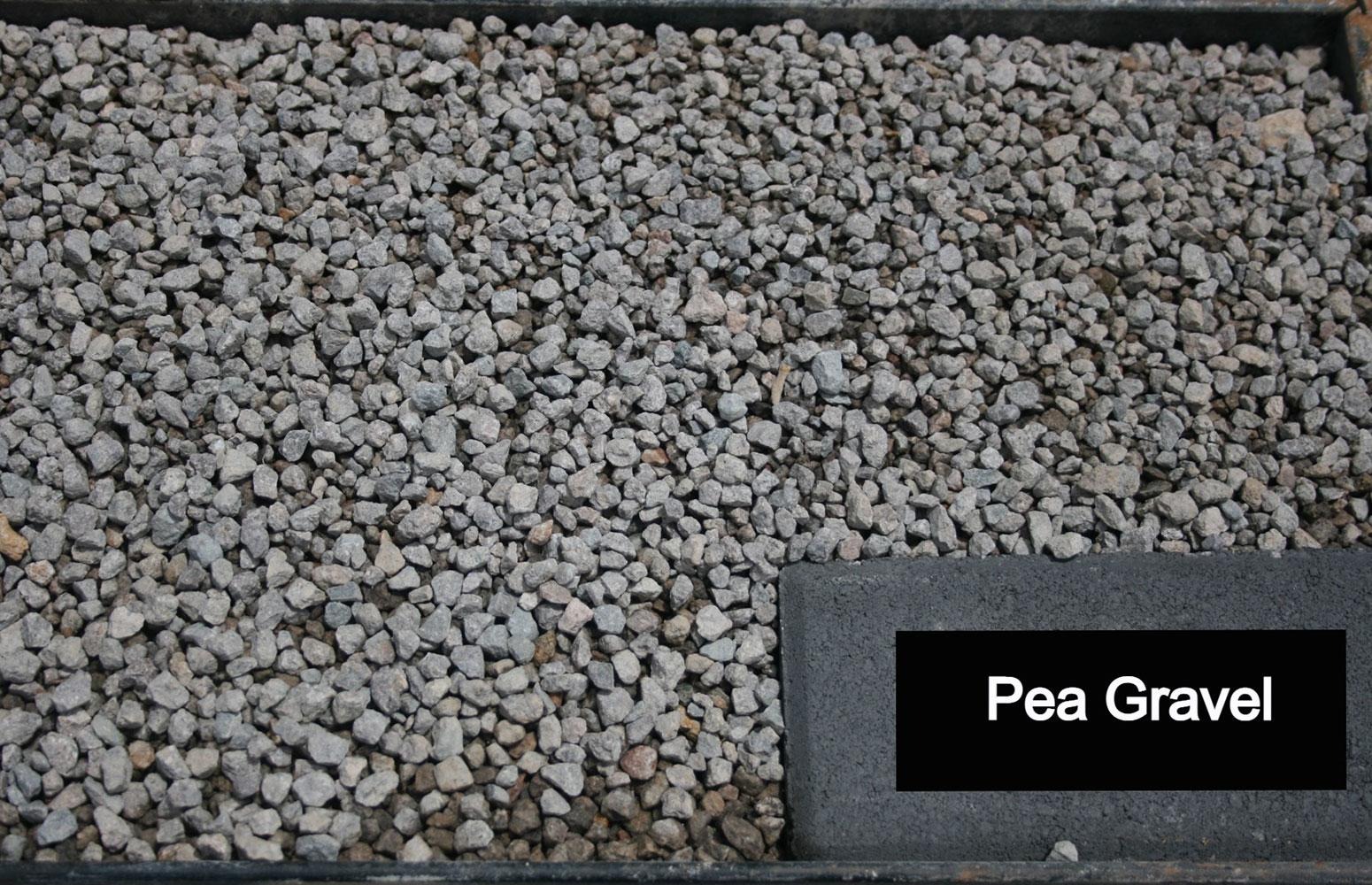
Pea gravel is different. It’s rounded, smooth, and soft underfoot. That makes it ideal where comfort or appearance matters more than compact stability.

Patios, sitting areas, and garden spaces benefit from pea gravel because it’s easier to walk on. It’s not going to hurt bare feet or create awkward footing. It’s also easy to spread and can cover areas evenly without needing heavy compaction. While it’s not as stable as 1/2″ gravel, it still works for drainage in areas where water just needs to spread out.

Pea gravel is flexible. Borders, flower beds, and shallow drainage areas all work well with it. It gives a natural, casual look while still performing its basic function. If you want something softer and easier to handle, pea gravel is your choice.
How to Decide Between 1/2″ Gravel and Pea Gravel?

Choosing the right gravel doesn’t have to be complicated. Here’s what to keep in mind:

  • Traffic – Are people walking over it? Vehicles driving? Consider what the area will see most.

  • Maintenance – Pea gravel shifts more and may need occasional topping. 1/2″ gravel locks together and stays in place.

  • Appearance – Rounded stones create a softer, more relaxed look. Angular stones give a defined, structured look.

  • Drainage – Both allow water to flow, but think about slope, soil, and how much water passes through.

When you keep these points in mind, picking the right gravel becomes straightforward. It’s not about guessing, it’s about thinking through what the area needs and choosing the type that fits.

Quick Takeaways

  • 1/2″ gravel = stable, compact, great for paths, driveways, and drainage.

  • Pea gravel = soft, rounded, better for patios, sitting areas, and decorative borders.

  • Medium-sized gravel is practical, low-maintenance, and handles water flow.

  • Both types are versatile and can work in most residential or commercial projects.

  • Consider traffic, look, and drainage before making a decision.

Why Choose Western Materials?

At Western Materials, we don’t just sell gravel. We know how to help you pick the right type for your project. Over 40 years in California, we’ve worked with contractors, landscapers, and homeowners. We provide the materials you need and make sure they arrive when you need them.

We carry both 1/2″ gravel and pea gravel in bulk. Our goal is simple: get you the right materials without hassle. We focus on service, reliability, and practical advice. We don’t overcomplicate things. You tell us what you need, and we make it happen.

Working with us means you get quality materials that perform as expected. No surprises. No gimmicks. Just reliable gravel for your project.

Getting Started

It doesn’t have to be a complex task to start a gravel project; however, it still needs a few reasonable steps:

  1. First of all, you should measure your space accurately so that you can figure out the amount of gravel that you will require.

  2. You should also determine whether 1/2″ gravel or pea gravel is more suitable by taking into consideration traffic, drainage, and appearance. 
  3. Prepare the base properly. This is important for keeping the gravel in place.

  4. You should make sure that the gravel is spread evenly all over the area.

  5. It is also a good habit to frequently check whether the surface is still leveled and usable.

By performing these actions, your gravel project will be durable, efficient, and aesthetically pleasing without the need for constant ​‍​‌‍​‍‌​‍​‌‍​‍‌checking.

Call to Action

 Get the Right Gravel for Your Project

Don’t guess with your landscaping. At Western Materials, we provide premium pea gravel and 1/2″ gravel for all kinds of projects, from patios and pathways to driveways and drainage areas. Contact us today to get reliable materials delivered on time. Let’s make your project simple and effective.

FAQs

Q1: Can I use 1/2″ gravel for a backyard patio?
Yes. It’s stable, compacts well, and holds up under regular use.

Q2: Is pea gravel safe for kids’ play areas?
Yes. Its smooth, rounded texture is gentle on bare feet.

Q3: Do you deliver gravel in bulk?
Yes. We provide bulk delivery throughout Southern and Northern California.

Q4: How do I decide between 1/2″ gravel and pea gravel?
Think about traffic, appearance, and drainage needs. 1/2″ gravel is stronger; pea gravel is softer and decorative.