.png)

What Is Aggregate Interlock and Why Does It Matter?
Published on:
August 3, 2026
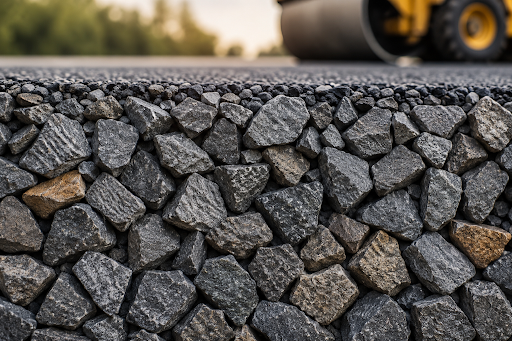
Whenever you drive down a smooth highway, park in a commercial lot, or walk across a newly paved driveway, you are relying on an invisible engineering marvel right beneath the surface. Long before asphalt or concrete is poured, the true load-bearing strength of any road depends on the quality of the road base material used beneath the pavement. At the heart of that foundation is aggregate interlock, a physical phenomenon that creates stability by locking crushed stone particles tightly together.
Without a strong foundation, even the thickest surface pavement will crack, rut, and shift under heavy traffic. In this guide, we will break down what aggregate interlock actually is, how particle shape and density dictate aggregate stability, and why choosing high-spec materials from trusted suppliers like Western Materials makes all the difference in building long-lasting infrastructure.
What Is Aggregate Interlock?
At its core, aggregate interlock is basically that mechanical, not-so-friendly friction along with a physical wedging that shows up when crushed stone and sand particles get locked tightly, under pressure, like they are quietly agreeing to stay put.
Picture a container full of smooth, round glass marbles. If you push down on the upper marble, the rest will glide and slip by each other, then they push outward against the walls, pretty naturally and with not much trouble.
In civil engineering, this mechanical locking transforms a loose collection of crushed rock into a rigid structural layer capable of transferring heavy axle loads across a broad footprint.
Particle Shape: Why Angular Beats Rounded Every Time
Not all crushed stone is created equal. The geometric shape of each stone directly impacts how effectively the layer locks together.
- Angular Aggregate Interlock: When stone is mechanically crushed in a quarry, it develops sharp edges, flat faces, and rough surface textures. These angular points bite into adjacent rocks, creating maximum friction. This angular aggregate interlock is essential for high-stress applications like highways, commercial staging yards, and airport runways.
- Rounded Aggregate: Naturally weathered river rock and smooth gravel may look great in decorative gardens, but they lack sharp corners. Under heavy vehicle loads, rounded stones roll past one another, leading to shifting sub-bases and pavement failure.
Engineers routinely specify crushed quarry rock with high angularity to guarantee structural integrity.
Particle Size Distribution and Construction-Grade Sand
To get the highest structural density, you need a balanced mix of different particle sizes, which is basically called well-graded aggregate, or at least that’s how it is usually framed in reports.
If the road base were made entirely from 1.5-inch stones, then there would be a lot of big void spaces between those larger rocks. Under heavy loads, those not-actually-filled gaps let the stones tilt, and then they can also shift around little by little. So engineers get around that by mixing coarse crushed stone with finer materials, like construction-grade sand, plus stone dust. The smaller sand particles tend to slip into the spaces between the medium stones, and then the medium stones take care of the openings around the big rocks.
Once it’s compacted properly, that tight packing locks each particle in place; it cuts down the void space a lot, and it also helps stop water from collecting or settling underneath the road.
Ensure lasting pavement performance with spec‑certified aggregates.
Request Material Quote
The Role of Road Base Compaction and Moisture Control
Proper road base compaction is the crucial step that turns loose material into a solid foundation. You can dump the highest quality crushed stone on a site, but until heavy rollers drive the air out, the material will behave like a pile of loose gravel.
During compaction, three major factors come into play:
- Air Void Elimination: Compaction forces individual stones into closer contact, driving out trapped air and forcing angular edges into an immediate interlocked state.
- Optimum Moisture Content (OMC): Water acts as a lubricant during compaction. With too little moisture, the stones fight against each other and refuse to settle. With too much water, the liquid fills the voids and pushes the rocks apart. Hitting the exact optimum moisture point allows particles to slide smoothly into their tightest possible arrangement.
- Target Density: Most municipal and state transportation specifications (such as Caltrans or Greenbook standards) require the base course to reach 95% to 100% of maximum dry density before paving begins.
How Interlock Protects Pavements Against Common Failures
When a road base lacks mechanical friction, the surface asphalt or concrete must bear all the load alone, leading to rapid degradation. Proper interlock prevents several common forms of road failure:
- Rutting and Shoving: Heavy commercial trucks stopping or turning exert immense lateral force. Strong interlock keeps the base from shifting sideways under heavy tires.
- Reflective cracking: It happens when the base flexes a lot under heavy traffic, and then the hard surface pavement above follows that movement, bending too, so it quickly cracks, splits, and breaks down.
- Water damage and erosion: It works differently, because a tightly packed well graded base helps stop water from pooling and also reduces soil erosion underneath the asphalt layer, which means the surface keeps going for years, not just a short while.
Build Stronger Foundations with Western Materials
Whether you are paving a highway, building a residential driveway, or prepping a commercial site, your project is only as strong as its foundation. At Western Materials, we supply contractors, municipalities, and builders with premium, high-spec aggregates engineered to meet strict structural standards. From clean crushed aggregate interlock materials and crushed rock to washed construction-grade sand and sub-base blends, our products deliver the density and performance required for long-term project success.
Choose angular crushed stone and engineered sand for maximum interlock.
Visit us now
Conclusion
At the end of the day, understanding aggregate interlock is fundamental for building infrastructure that holds up over time. That mix of sharp particle angularity, proper grading of sizes, and careful compaction makes a strong sub-base you can rely on, even under heavy loads, without it shifting around or developing cracking issues.
When planning your next paving or structural base project, choose a reliable supplier that delivers consistent, spec-certified aggregates every time. Contact Western Materials today to get a quote on high-performance materials for your aggregate interlock in road base applications!
Frequently Asked Questions
Q1: What is aggregate interlock and why is it important in construction?
A: Mechanical aggregate interlock happens when angular crushed stone pieces wedge up tight together under load, as they lock in place. At Western Materials, we provide excellent aggregates that build this crucial friction, turning loose gravel into a firm sub-base able to take heavy traffic loads without sliding or developing cracks later on.
Q2: Why is angular crushed stone better than rounded gravel for road bases?
A: Angular crushed stone has sharp, irregular edges that bite into nearby rock bits, so you get a locked, high-friction setup, or matrix, if you will. On the other hand, smoother rounded gravel will slip, roll, and slide out of place under the weight of heavy vehicles. That movement then turns into weak sub-bases, rutting, and sooner-than-expected pavement failure even with everyday traffic loads.
Q3: What role does construction-grade sand play in aggregate stability?
A: Construction-grade sand goes into the smaller empty spots between the bigger crushed stones. Mixed with coarse aggregate and packed correctly, these finer particles become a denser, more tightly packed structural layer. It helps clear air gaps; it also keeps water out, and in general it boosts the full load-bearing capacity.
Q4: How does moisture content affect road base compaction?
A: Moisture works like some natural lubricant while compaction happens; it helps the aggregate particles slide into their tightest possible orientation. When the mix is a bit too dry, the particles resist moving around, like they stay stubborn. But if it turns out too wet, the water that gets caught inside will push the rocks apart, and that stops the base from reaching the target density, not in a nice way.
Q5: Can poor aggregate interlock cause new asphalt to crack?
A: Yes, inadequate base interlock lets the sub-base layer flex and settle unevenly when heavy vehicles drive over it. That deeper movement ends up creating bending stress in the asphalt surface on top, so you get earlier cracking, potholes, and costly repairs after construction, which is really annoying.
.avif)
Materials management and founders
have produced and supplied high quality
sand and gravel to contractors &
aggregate users across California.
.svg)
.svg)


