.png)

What Causes Honeycombing Due to Poor Sand Selection?
Published on:
September 7, 2026
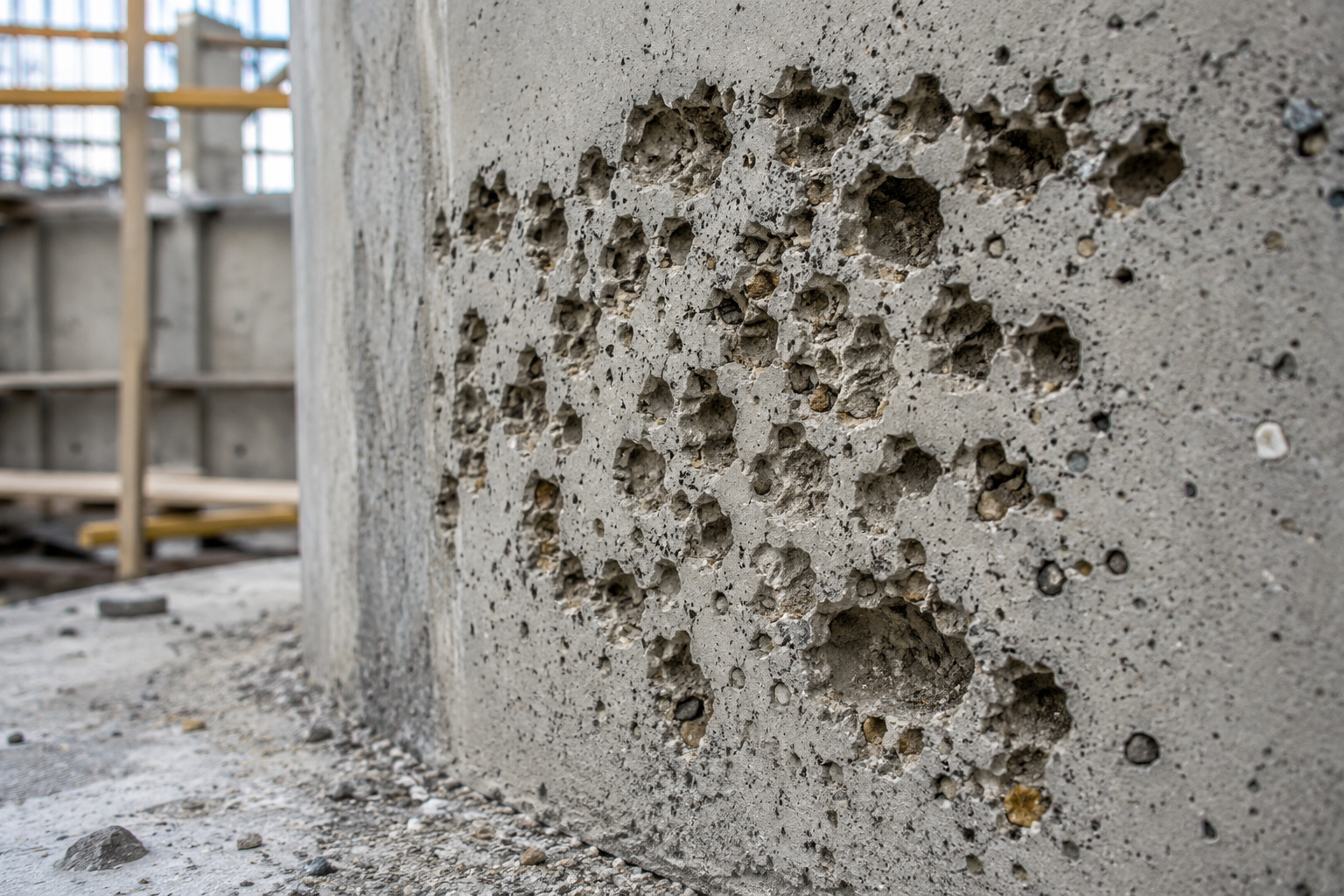
Concrete honeycombing usually starts with gaps inside fresh concrete. Poor sand selection can create those gaps by reducing packing, flow, and proper mortar coverage. Concrete honeycombing becomes more likely when the sand has poor grading, excess dust, uneven particles, or unsuitable moisture. The mix may look workable during placement, yet small spaces can remain around coarse aggregate. At Western Materials, we focus on material quality before placement begins. Good sand helps concrete flow around steel and coarse aggregate with fewer weak pockets.
What Causes Honeycombing When Sand Quality Is Poor?
Sand plays a major role in filling the spaces between larger aggregate particles. When sand has inconsistent particle sizes, the mix can leave small gaps during placement. Those gaps can grow when vibration fails to move the concrete evenly through the form.
Concrete sand needs a balanced range of particle sizes for good packing, and understanding aggregate gradation can help explain how those particle sizes affect the mix. Very fine material can increase water demand. Very coarse material can leave larger spaces between particles. Both conditions can reduce the uniformity of the finished mix.
Moisture also matters during batching. Wet sand can change the actual water balance in a mix. Dry sand can absorb part of the mix water, making aggregate absorption an important factor in concrete mix design. At Western Materials, we check material condition carefully because small changes can affect placement behavior.
How Does Aggregate Gradation Affect Concrete Honeycombing?
This is a very clean topical relationship because both articles discuss particle-size distribution and how it affects material behavior. A well-graded mix fills space more effectively. Each size works with the next size to create a tighter structure.
Poor grading can leave larger pockets between particles. Cement paste then has more space to cover. That may increase paste demand and make the mix harder to place. A poorly graded sand source can also affect the balance between coarse and fine material.
A strong mix starts with controlled materials. We look at particle size distribution before recommending a material source. This step gives the crew a better chance of getting consistent placement and a tighter finished surface.
Why Does Fine Aggregate Matter During Concrete Placement?
Fine aggregate helps fill spaces between larger particles. The right amount supports smooth movement through forms and around reinforcement. The wrong balance can make the mix harsh, sticky, or difficult to compact.
Too little fine material can reduce the mortar needed around coarse aggregate. Too much very fine material can raise surface area and increase water demand, which is one reason fineness modulus matters when evaluating construction sand. Both conditions can change the way fresh concrete moves.
The goal is a balanced blend, which starts with choosing the right sand mix for the concrete application. The material should support steady flow while keeping enough body for proper placement. We pay close attention to this balance because placement problems often begin with material selection.
Choose Better Sand for Stronger Concrete and Fewer Defects
Talk to Our Team
How Can Poor Sand Cause Segregation and Bleeding?
Segregation and bleeding can create uneven concrete with weak zones and surface problems. When the mix separates, coarse particles can move away from cement-rich paste. Water can also rise toward the surface during settling.
Poor sand can make this behavior worse when the mix lacks a balanced particle structure. The result can include areas with excess paste, exposed aggregate, or low-density pockets.
Proper batching and placement still matter. Even a good sand source needs correct water control and proper mixing. Material selection gives the crew a strong starting point, while placement practices help protect that starting point.
What Role Does Workability Play in Preventing Voids?
Workability of concrete describes how easily fresh concrete can move, spread, and compact. A mix with poor workability can struggle around tight reinforcement and narrow form spaces.
Workers may add extra water when a mix feels stiff. That shortcut can create new problems. More water can change strength, increase shrinkage, and affect surface quality, which can also contribute to concrete cracking when other mix or placement issues are present.
The better approach is to address the source of poor workability. Sand grading, moisture, aggregate balance, and mix design all deserve attention. At Western Materials, we look at the full material picture instead of treating placement trouble as a single issue.
How Does Void Formation Develop Inside Finished Concrete?
Void formation often begins when concrete fails to surround aggregate and reinforcement fully. Air can remain trapped when fresh concrete cannot move into tight spaces. Insufficient vibration can leave those spaces behind.
Poor sand selection can contribute by making the mix harder to place. A rough or poorly graded blend may resist movement during consolidation. The problem becomes more visible after form removal.
Common signs include rough areas, exposed aggregate, deep surface pockets, and visible spaces around reinforcing steel. These signs deserve attention because surface damage can point toward deeper quality concerns.
Can ASTM C33 Fine Aggregate Standard Help Reduce Honeycombing?
The ASTM C33 fine aggregate standard gives project teams a useful reference for aggregate quality and grading. Following an accepted specification helps create a more controlled material base.
Specification checks can include grading, cleanliness, and other material characteristics. These checks support consistent batching and help reduce surprises during placement.
A standard alone cannot fix every concrete problem. Mix design, water control, consolidation, and formwork still matter. However, good material control removes one major source of variation before concrete reaches the jobsite.
How Can Good Sand Selection Reduce Concrete Defects?
Concrete defects often come from several small problems working together. Poor sand may be one part of that chain. Incorrect water content, weak vibration, crowded reinforcement, and poor form preparation can add to the result.
A practical quality process should check materials before use. The team should review the sand source, grading, moisture, cleanliness, and consistency across deliveries.
When contractors search for sand suppliers near me in San Fernando Valley LA, price alone should never guide the choice. Material records, testing support, source consistency, and technical help can matter far more for concrete performance.
We help customers make material decisions with the job conditions in mind. The right source should fit the mix, placement method, and project requirements.
What Should Contractors Check Before Choosing Concrete Sand?
Start with the basics before approving a material source. Review grading data, moisture condition, cleanliness, and the expected use within the mix.
The following checks can help:
- Review recent aggregate test results before ordering material.
- Confirm consistent grading across expected deliveries.
- Check moisture changes before final batching decisions.
- Match sand characteristics with the approved concrete mix.
- Review placement conditions around dense reinforcement and forms.
A supplier should also communicate clearly about material changes. A sudden shift in source or grading can affect a mix already performing well.
At Western Materials, we believe reliable material information supports better field decisions. That approach can help crews avoid expensive repairs caused by preventable material issues.
Get Reliable Aggregate Guidance for Your Concrete Projects
Request Material Guidance
What Is the Best Way to Prevent Concrete Honeycombing?
Preventing Concrete honeycombing starts before the first truck reaches the form. Choose suitable sand, control moisture, confirm grading, and maintain the approved mix design.
Management teams should also use proper consolidation methods. Tight reinforcement areas may need extra attention because concrete has less room to move. Formwork should remain secure so paste cannot leak through open joints.
When a surface already shows honeycombing, repair decisions should follow a proper inspection. Shallow surface damage may need a different treatment from deeper voids exposing reinforcement.
At Western Materials, we are the trusted choice for customers searching for sand suppliers near me and reliable materials for practical project needs. Better sand selection gives concrete a stronger starting point and helps reduce avoidable placement problems.
FAQs
1. What Causes Concrete Honeycombing in Fresh Concrete?
Concrete honeycombing can develop when fresh concrete fails to fill spaces around coarse aggregate and reinforcement. Poor sand grading can reduce flow and packing, leaving air pockets inside the placement. Low workability, weak vibration, tight reinforcement, and form leakage can add to the problem. The company recommends checking material grading and moisture before placement begins.
2. Can Poor Sand Quality Make Concrete Weaker?
Sand quality can affect the way fresh concrete packs and moves through forms. A poorly graded source may create more space and demand more paste or water during mixing. That change can affect consistency and finished performance. The team reviews material characteristics before recommending a source for a specific concrete mix.
3. How Does Fine Aggregate Affect Concrete Workability?
Fine aggregate helps fill spaces between larger particles and supports smoother concrete movement. A balanced blend can help the mix move around reinforcement and into corners during consolidation. Excessively fine or poorly graded material can raise water demand and change the feel of the mix. The management team considers grading, moisture, and mix requirements together.
4. What Should Contractors Check When Selecting Concrete Sand?
Contractors should review grading, cleanliness, moisture, source consistency, and recent test data before approving material. Project conditions also deserve attention, especially where reinforcement is dense or forms contain narrow sections. The company encourages customers to compare technical information with actual placement needs. A suitable source should support predictable batching and reliable concrete performance.
5. Can Proper Aggregate Gradation Help Prevent Concrete Defects?
Aggregate gradation can support better particle packing and smoother concrete movement during placement. A balanced range of sizes helps reduce large spaces between aggregate particles and supports better mortar coverage. The company treats material consistency as an important part of concrete quality. Proper grading works best alongside correct water control, mixing, vibration, and form preparation.
.avif)
Materials management and founders
have produced and supplied high quality
sand and gravel to contractors &
aggregate users across California.
.svg)
.svg)


