.png)

What Are Footing Additives and How Do They Work?
Published on:
August 31, 2026
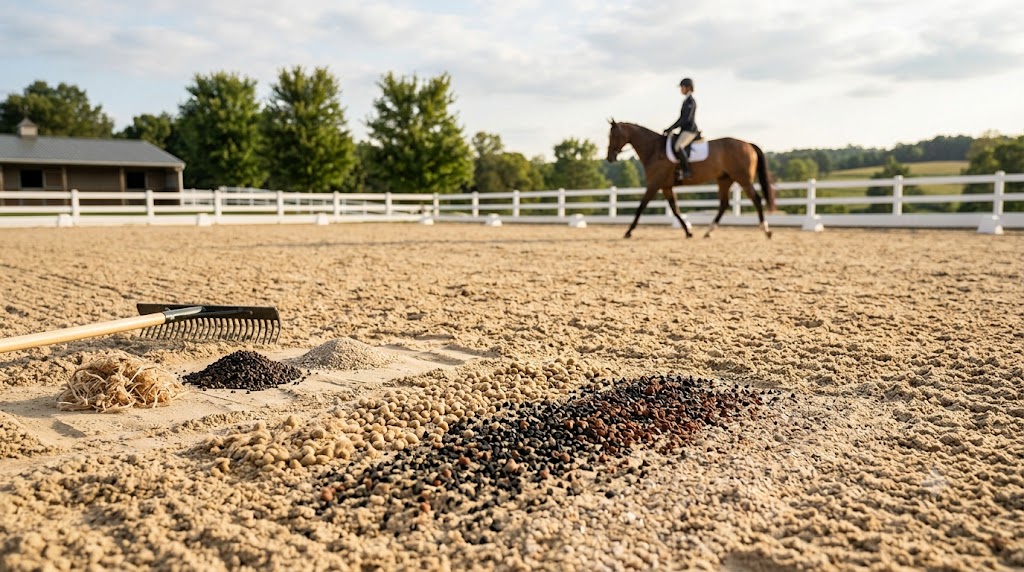
Building and maintaining an optimal riding ring takes more than spreading plain sand over dirt. Western Materials supplies engineered sand mixtures designed to give horses and riders a stable, predictable surface. Plain sand compacts over time, loses water fast in warm weather, and shifts under heavy weight. Adding arena footing additives to a base layer turns loose sand into a supportive, high-performing surface that holds moisture and keeps the ground stable. This breakdown explains how these materials work and why reliable additives protect horse health.
What Are Footing Additives?
Footing additives are extra materials mixed directly into top sand layers to improve performance. Plain washed sand gives basic structure, but individual sand grains slide apart under pressure, making the best choice of horse arena footing important for maintaining a stable surface. A quality footing additive creates a supportive mesh inside the sand. This network stops loose grains from rolling away or packing tight like concrete.
These materials include synthetic fabrics, microfibers, shredded rubber, wood products, and dust-binding wax coatings. When mixed properly into sand, they work like natural grass roots. Hooves get a firm base for turns while the ground absorbs impact forces.
Looking to transform your arena into a high-performing riding surface?
Get A Quote
What Are the Mechanical Functions of Additives in Arena Footing?
Mixing extra materials into base sand changes how the surface acts under hooves. These amendments alter density, spring, and water-holding capacity across the ring.
- Mechanical Interlocking: Small fibers interlock with rough sand grains. This weave stops deep tracks from forming.
- Impact Dissipation: Flexible rubber particles bend under weight. This movement lowers harsh impact forces moving up equine legs.
- Liquid Retention: Porous materials hold water inside the top layer. This moisture stops fast evaporation in dry air.
Through these combined actions, modified arena footing stays even across busy paths. Surfaces remain balanced by preventing soft spots near fence lines and hard-packed dirt along central paths.
Which Materials Are Used in Footing Modification?
Different riding styles need different qualities from an arena surface. Choosing the right material depends on whether a ring needs more bounce, better grip, or easier maintenance.
- Fiber and Felt Textiles
Synthetic fabric blends include polyester microfibers and felt pieces. These materials work well in jumping and dressage rings. Mixed into washed sand, these fibers trap sand grains in a dense grid. This structure gives essential surface stability. Horses make sharp turns and launch into jumps without slipping or pushing sand out of place.
- Rubber Granules and Flakes
Crumb rubber and shredded rubber mats add spring to heavy sand bases. Rubber compresses under hoof pressure and bounces back fast. This spring provides cushioning and shock absorption for horses with stiff joints or leg strain. Rubber keeps sand loose so indoor rings do not pack down hard.
- Wood Fibers and Organic Matter
Coarse wood chips, sawdust, or ground wood fiber soften hard ground well, although hardwood vs softwood wood chips can have different characteristics. These natural items excel at moisture retention, soaking up rain fast and releasing it slowly on warm days. Since wood decays over time, ring owners prefer fresh material to synthetic options.
- Polymer and Wax Coatings
Wax and polymer liquids coat individual sand grains directly. By binding fine dust particles to larger sand grains, these coatings provide dust suppression without daily watering schedules. They work well in indoor rings where sprinklers cause unwanted indoor moisture or rot roof beams.
How Do Additives Enhance Biomechanics and Hoof Health?
Riding surfaces directly affect how a horse moves, trains, and recovers. Hard ground sends shock through joints and tendons, while deep, soft ground strains muscles and ligaments, showing how the wrong sand can impact your horse's hoof health. Properly treated horse footing balances cushion and firmness. It creates a safe landing area that yields slightly before giving a firm grip.
Key physical benefits include:
- Balanced Grip: Delivering strong traction and hoof support during tight turns. This stability prevents sudden slips that interrupt movement.
- Consistent Strain Reduction: Stopping legs from sinking deep into loose dirt. This protection prevents tendon strain.
- Uniform Energy Absorption: Returning impact energy evenly across every step. This support allows longer training sessions with less tiredness.
How to Select and Integrate the Right Additive Mix?
Preparing your riding ring for new materials requires careful evaluation of your current base and a step-by-step application process to build a stable riding surface.
- Evaluating Arena Base Factors
Choosing additions requires checking the base sand type, local weather, and riding discipline. Coarse sand needs different fiber ratios than fine silica sand.
- Checking Drainage and Surface Level
Before adding materials, check that base layers drain water properly and that the horse arena footing depth is appropriate for the riding discipline.
- Spreading and Blending Materials
Spreading footing material involves dropping measured amounts evenly across the top. Rototilling mixes the top three to four inches of sand.
- Settling the Final Surface
Rolling and watering settle everything into a solid riding surface.
What Maintenance Practices Keep Modified Surfaces Performing?
Maintaining a modified arena involves specific grooming techniques and routine care to protect underlying layers while preserving surface consistency.
- Selecting Proper Grooming Tools
Additives improve performance and cut daily labor, but modified rings still need regular care. Grooming tools include spring-tine harrows or specialized fiber drags. Set these tools to the right depth to avoid hooking lower base layers while fluffing packed sand.
- Managing Moisture for Grip Strength
Watering remains necessary for textile additions to maintain grip strength, particularly as weather impacts horse arena sand through heat, rain, and changing moisture conditions.
- Varying Drag Patterns and Routes
Change grooming directions regularly. Varying drag routes stops materials from drifting toward ring walls and helps prevent uneven footing in horse arenas during daily exercise.
Ready to build a safer, more stable surface for your horses?
Call Us Now
How Do Additives Improve Arena Surfaces Overall?
Upgrading a riding ring with proven materials protects horse health and extends surface life. Mixing quality washed sand with arena footing additives creates a durable, low-dust environment that absorbs heavy impact while supporting sharp turns. Western Materials supplies California riding facilities with washed sand built to pair with modern synthetic and natural footing additions. By evaluating weather, riding style, and care needs, ring owners turn any equestrian sand arena into a safe, reliable surface built for long performance.
Frequently Asked Questions
Why should facility owners consider incorporating amendments into their rings?
Integrating arena footing additives into base sand improves shock absorption, controls dust, and prevents hard packing. Mixing clean sand with these materials creates a stable layer that protects horse legs during daily work. This upgrade extends surface life, cuts down drag cycles, and keeps ground conditions consistent in all weather.
How do rubber granules improve overall sand performance?
Flexible rubber pieces mixed into coarse sand work like small shock absorbers that yield under weight and spring back quickly. Adding this footing material lowers impact stress on horse joints while stopping fine sand grains from packing tight. Arenas stay soft, springy, and easy to maintain over time.
Can textile fibers reduce airborne particles in indoor environments?
Textile microfibers hold water inside the top layer much longer than raw sand. Clean sand bases in an equestrian sand arena let synthetic fibers trap moisture, cutting down dust without creating mud. Better water retention keeps surfaces firm, improves air quality, and cuts daily watering work.
What maintenance tools work best for groomers managing synthetic topsoil?
Facilities using a fiber-blended riding surface get the best results from drags with flexible spring tines and leveling rollers. Reliable drag equipment re-mixes fibers through the sand depth without snagging lower base layers. Regular grooming keeps materials mixed, smooths deep tracks, and maintains spring across high-use areas.
Do organic materials like wood fibers decompose over time?
Wood chips and timber fibers break down over time from moisture and biological decay. Rotting wood creates fine dust inside the arena footing and loses cushion, requiring fresh material to stay soft. Synthetic fibers and rubber offer long-lasting stability, while wood gives short-term softness.
.avif)
Materials management and founders
have produced and supplied high quality
sand and gravel to contractors &
aggregate users across California.
.svg)
.svg)


