.png)

How Long Do Cobblestone Rock Installations Typically Last?
Published on:
July 5, 2026
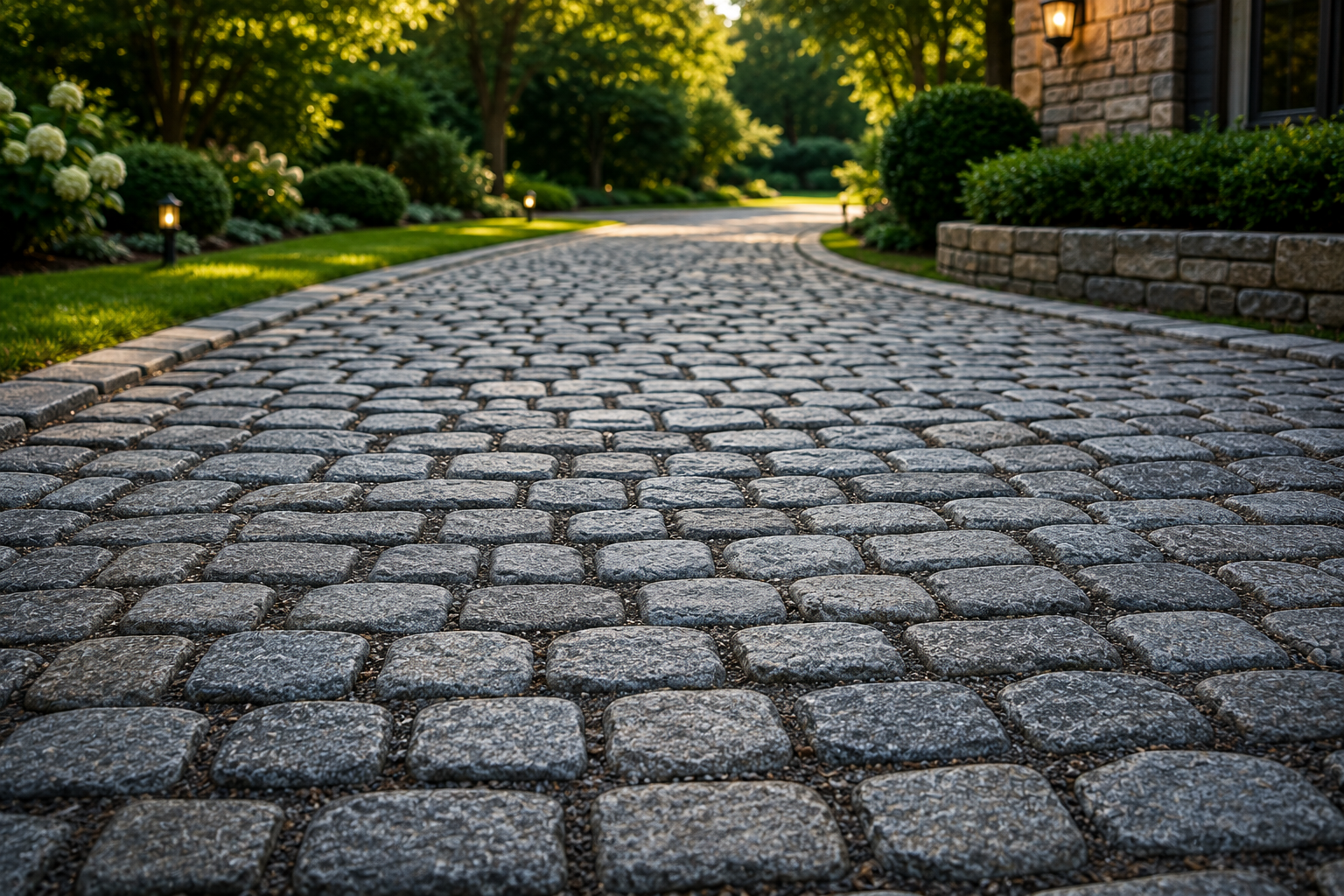
There's a reason you still see cobblestone paving on streets that were laid a hundred years ago. These stones outlast almost every other surface material used in residential and commercial projects, and yet plenty of homeowners still wonder whether cobblestone is worth the upfront investment.
If you're looking at cobblestone rocks for sale and trying to figure out how long they'll actually hold up on your property, this blog breaks down the honest answer. We'll cover what determines cobblestone lifespan, how different environments affect the material, what maintenance looks like over the years, and why sourcing quality stone from Western Materials makes a real difference in how your installation performs.
What Actually Determines Cobblestone Lifespan
The short answer is: a very, very long time. But the extended version depends on a few things working together, or maybe not, depending on the situation.
Natural cobblestone is a dense, tough rock. Most people point to granite and basalt as the usual examples, and both land pretty high on the Mohs hardness scale. That mineral hardness is what helps cobblestone paving resist surface scuffing and, also, slow down general wear. So every vehicle that rolls over a cobblestone driveway, every footstep on a cobblestone path, feels like it’s scraping against a substance that formed under extreme geological pressure. It doesn’t budge easily.
The abrasion resistance rating of granite cobblestone, for instance, is significantly higher than that of concrete pavers or clay brick. That means surface wear characteristics develop very slowly. You're not really checking the kind of surface degradation that shows up in asphalt within a decade or so. A solid cobblestone installation that sits well and is done in a moderate climate with even basic upkeep tends to last 50 to 100 years routinely. When it's lower traffic stuff, like garden paths or decorative borders, the practical material longevity factors can nudge it well past a century, if everything stays reasonable.
Stone density characteristics also play a role here. Denser stone takes in less water, which really counts a lot for how well it survives freeze-thaw cycles. A type of stone that sorta draws moisture into its pores, can end up cracking once that trapped water freezes and expands, it’s like the structure can’t quite take it. Granite and basalt cobblestones, in particular, are very dense, also low-porosity, so they manage these freeze-thaw cycles a lot better than softer, more porous options.
How Climate and Environment Affect Cobblestone Durability
Cobblestone durability is not uniform across every climate. That's worth being clear about.
In Southern California, where Western Materials supplies projects across Los Angeles, San Diego, Orange County, and beyond, the climate is genuinely favorable for stone paving materials. There's minimal freeze-thaw stress, rainfall is relatively low and predictable, and UV exposure, while intense, doesn't degrade natural stone the way it breaks down synthetic materials. A cobblestone driveway installed in LA can realistically look excellent for 60 to 80 years with nothing more than occasional washing and joint sand replacement.
In colder, wetter climates, natural stone weathering becomes a more active concern. The compressive strength properties of the stone itself usually hold fine, since most natural cobbles can handle thousands of pounds per square inch. The bigger issue usually is the joining stuff between stones, like mortar or grout, that can break down faster than the stones themselves. When those joints start failing, water slips under the installation, the base material kind of shifts, and the stones may settle unevenly. And then you really start noticing the problems, not just minor stuff.
The Subbase Factor People Often Overlook
Here's something that surprises a lot of homeowners: the cobblestones themselves rarely fail. What fails is what's underneath them.
A cobblestone installation is really a system. The stones sit on a bed of sand, which sits on a compacted aggregate base. If that base wasn't prepared properly at the time of installation, or if drainage wasn't considered, the subbase can erode or shift over time. When the foundation moves, the stones above move with it. You can end up with individual stones sitting at odd angles, which then creates surface irregularities and accelerates the wear on individual pieces.
This is exactly why the quality of base material going into the project matters as much as the cobblestones themselves.
Cobblestone Maintenance and What It Actually Involves
The maintenance profile of cobblestone is one of its most underrated selling points. It's not zero-effort, but it's minimal compared to most alternatives.
Jointing sand between stones tends to wash out gradually over the years, particularly after heavy rain. Refilling joints with polymeric sand every few years keeps water from working its way beneath the surface. Individual stones can occasionally be lifted and reset if they settle, without disturbing the surrounding installation. There's no sealing required for most natural cobbles under normal conditions, and because the surface wear characteristics of granite and basalt develop so slowly, the stones themselves rarely need replacement.
Compare that to asphalt, which typically needs resurfacing every 15 to 25 years, or concrete, which can crack and spall and doesn't have easy spot-repair options. Cobblestone paving gives you individual unit replacement when and if something does go wrong. It's one of the very few stone paving materials where repairs actually look right because you're putting back the same material.
Wrapping Up
Cobblestone remains one of the most durable and long-lasting paving materials available, often delivering decades of reliable performance with minimal maintenance. While the stone itself is built to last, factors such as material quality, proper installation, drainage, and subbase preparation all play an important role in maximizing its lifespan.
At Western Materials, we supply high-quality cobblestones and construction aggregates that help support durable, long-lasting installations for residential and commercial projects throughout Southern California.
Ready to invest in cobblestone paving that can serve your property for decades?
Request a Quote
FAQs
How long does a cobblestone driveway typically last compared to asphalt or concrete?
A properly installed cobblestone driveway, just sitting on a well-compacted base, tends to keep going around 50 to 100 years, give or take a bit. Asphalt usually ends up needing resurfacing every 15 to 25 years, and concrete can start cracking and spalling within two to three decades if you get freeze-thaw seasons regularly. Really, the combo of high mineral hardness, strong compressive strength properties, and those individual unit replacement options is what makes cobblestone paving last in a way that genuinely outshines most other choices.
Does natural stone weathering significantly shorten the life of cobblestone installations?
In most climates, natural stone weathering doesn’t really do much to the stones themselves, like it stays pretty low-key. Granite and basalt cobblestones have high stone density properties and low porosity, so moisture can’t get in much, and that also keeps freeze- thaw damage from becoming a big thing. The areas more vulnerable to weathering are the jointing material between stones and the subbase below. Regular joint sand maintenance addresses the former, and proper installation addresses the latter.
What maintenance does a cobblestone walkway need over its lifetime?
Cobblestone maintenance is minimal. Jointing sand needs replenishment every few years as it gradually washes out, especially after heavy rain. Occasional power washing keeps the surface clean. Individual stones that settle can be lifted and reset without disturbing adjacent material. There's generally no need for sealing with dense natural stone. That low-maintenance profile is one of the reasons cobblestone walkway installations remain popular for both residential and commercial projects.
Does the subbase affect cobblestone lifespan as much as the stone quality itself?
Yes, and in many cases more. The cobblestones themselves are rarely what fail in a poorly performing installation. Surface wear characteristics of quality stone are extremely slow to develop. What tends to cause problems is subbase movement, usually from inadequate compaction or poor drainage at installation. Water working beneath the surface shifts the foundation, causing stones to settle unevenly. A properly graded, well-compacted base is what holds the whole system together long-term.
Are there cobblestone rocks for sale that are better suited to Southern California's climate?
In Southern California’s mild, low-freeze climate, a wider set of cobblestone choices seems to work better than in colder regions. Dense igneous stones, like granite and basalt, have the top abrasion-resistance rating, and they keep up well environmentally too. That combination is why they make sense for high-traffic driveways and commercial spots.
Meanwhile, for decorative cobblestone paving in garden walks or other low-traffic zones, smoother river cobbles also tend to last. Western Materials provides cobbles in multiple sizes, and those options fit both structural uses and the more ornamental side across the region.
.avif)
Materials management and founders
have produced and supplied high quality
sand and gravel to contractors &
aggregate users across California.
.svg)
.svg)


