.png)

How Do Bunker Edges Influence Sand Stability?
Published on:
August 28, 2026
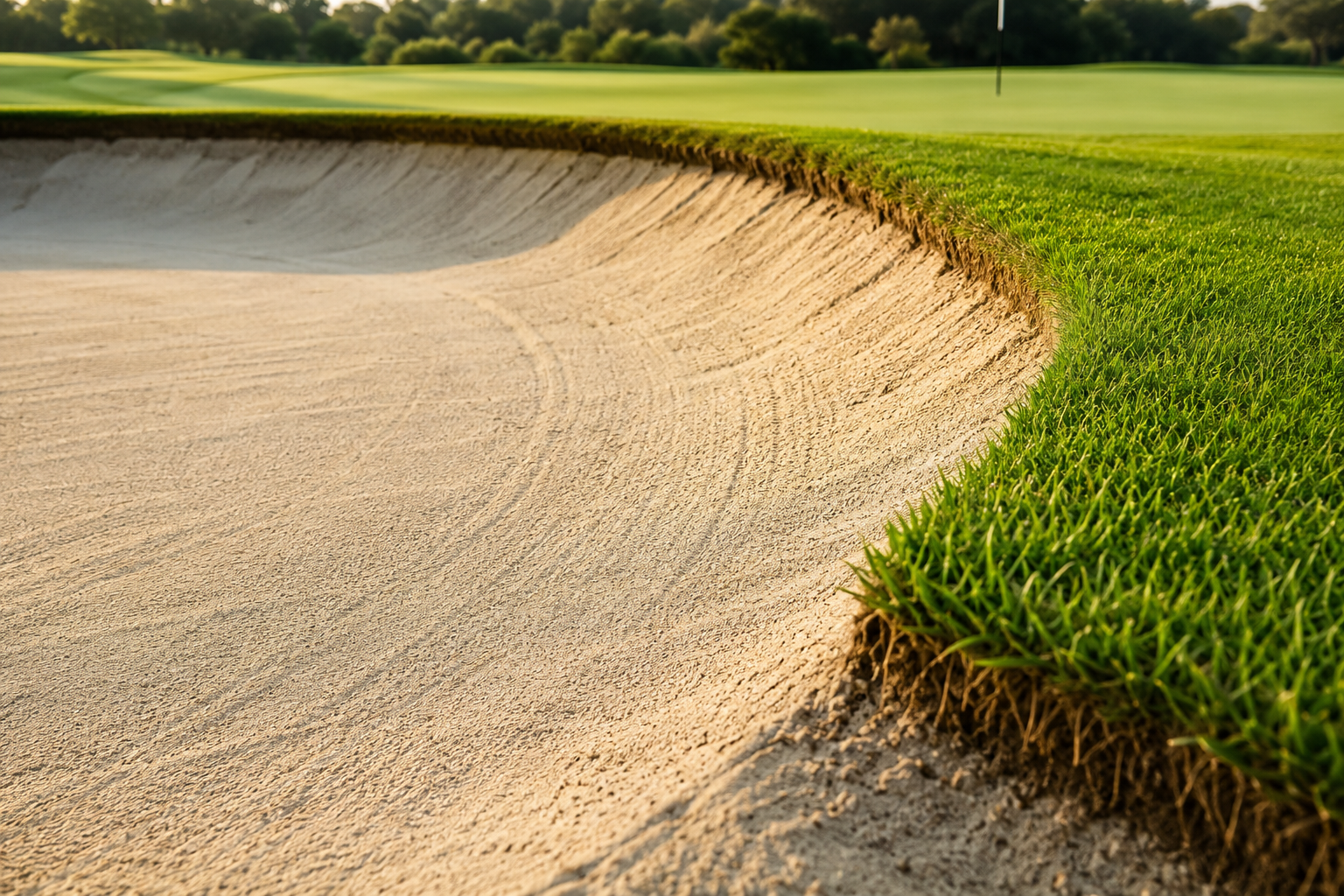
Most golfers never give the edge of a bunker a second thought. They see sand, a rake, and a challenge. But the edge decides whether sand stays on the slope or piles up at the bottom.
Bunker edge stability starts with the lip. When that lip holds, the sand stays firm. When it fails, everything above it starts creeping downhill.
This matters more than people realize. It affects playability, maintenance hours, and how much bunker sand you replace each season. Get the edge wrong, and all of that suffers.
What the Edge Actually Does
Most people treat the edge like a decorative line. In reality, it's a structural feature. The lip of a Golf bunker does three jobs.
It holds sand in place, defines the shot, and protects the surrounding turf. When the edge collapses, all three fail at once.
A sharp, well-built edge does a lot of good. Balls roll back predictably. The face keeps its shape through heavy use.
A worn edge changes the picture. A worn edge changes the picture. Balls plug more often, increasing the risk of fried egg lies in golf bunkers as the sand profile changes. Sand thins near the top and gathers at the bottom.
That is the real cost of ignoring Bunker edge stability. It doesn't just look bad. It changes how the bunker plays.
Why Sand Slides: The Science Made Simple
Sand follows one simple rule. It moves when gravity beats friction. On a flat surface, friction wins. On a slope, the fight gets interesting.
Slope stability comes down to the angle of the lip. Push past a certain steepness and the sand can't support itself. It gives way in small sheets, then big ones.
Sand particle migration is the technical term for this slow drift. Fine grains slip between coarse ones and work their way down, and the difference between angular and rounded sand in a bunker can influence how well particles resist movement. Over weeks, the face reshapes itself.
Water speeds things up. Rain soaks into the sand and adds weight. Heavy, wet sand slides far more easily than dry sand.
Why Edges Fail: The Main Culprits
Sand doesn't move randomly. Most failures trace back to the same triggers:
- The lip is too steep for the sand type. Every sand has a natural angle of repose, and steep faces push past it. The upper layer moves all at once.
- Water runs over the edge after rain. It washes fine particles down and carves channels into the face. Each storm deepens them a little more.
- Traffic concentrates near the lip. Every shot, step, and rake pounds the same fragile zone day after day. It wears first and fails first.
- Turf at the edge dies back. Dead roots loosen the soil, and the edge loses its grip on the sand above.
- Wind lifts dry sand off the top. It drifts away or lands in the rough, never to return.
Bunker Construction Choices That Matter
The good news is that edge failure is preventable. It starts with the shape of the face. A gentle, consistent slope holds sand better than a sharp vertical lip.
Crews often inherit bad angles, but they can be fixed. The base layer matters too. A Bunker liner system stops sand from mixing with the soil below.
Without a liner, rain pushes sand down into the ground, and soil works its way up into the play surface. Liners also help with sand contamination in golf courses, which can affect drainage, consistency, and bunker performance.
Dirty sand clumps, drains poorly, and holds footprints longer. Bunker edge stability isn't a luxury. It's the foundation of a good bunker.
Sand Retention Is an Ongoing Job
Even a well-built edge needs regular attention. Skip these tasks and sand will disappear faster than you expect.
- Rake sand back up the face after play. It takes minutes and prevents slow, steady loss. Players notice the difference right away.
- Check the lip after heavy rain. Channels and washouts need filling before they grow. Small fixes stop big problems later.
- Top up thin areas with matching sand and maintain the ideal depth for golf bunker sand to help preserve consistent playing conditions. Different grains behave differently, so stick to one source. Mixing types creates weak spots.
- Watch for leaves and debris. They break down and change how sand drains and holds. Clean sand plays predictably every time.
- Reshape edges every season. Small corrections beat major rebuilds and cost far less.
Erosion control starts at the edge. The lip is the front line. If it holds, sand stays put. If it fails, the whole bunker drains.
Our Take at Western Materials
We supply sand for courses across California and see the same mistake everywhere. Courses focus on the sand they buy and ignore the edge holding it.
Stable bunker sand starts below the surface. The edge, the liner, and the slope do more work than the sand itself ever will.
The best sand in the world won't help if the lip keeps failing. A good edge makes average sand play well. A bad edge makes premium sand play poorly.
That is why we talk about Bunker edge stability with every course we work with. Check your edges before ordering another load. It saves sand, time, and frustration.
FAQ
What causes bunker edge stability to fail?
It fails when the lip gets too steep, water cuts through the face, or traffic wears down one spot. At Western Materials, we see edges collapse most often after heavy rain. Regular reshaping and proper sand depth are the best prevention.
How often should the edge be reshaped?
It depends on traffic, weather, and sand type. Most courses reshape edges once or twice a season. Heavily played courses may need monthly touch-ups. Watch for thinning sand near the lip and act before visible erosion becomes a bigger problem.
Does the type of sand affect edge stability?
Yes, more than most people expect. Angular sand locks together and holds steeper slopes. Round sand shifts and slides under pressure. Finer sand drains slowly and moves faster after rain. Match your sand to the slope angle. It is a smart decision.
What is the best way to keep sand from washing out of a bunker?
Build an edge with the right slope, install a liner, and repair washouts after storms. Deep sand against a shallow face holds far better than thin sand against a steep one. Drainage at the lip also matters.
Do liner systems really stop sand loss?
Yes, when paired with a solid edge and routine maintenance. A liner keeps the play surface clean, improves drainage, and stops the sand layer from thinning from below. It's not a magic fix, but it removes a hidden cause of loss.
Conclusion
The edge does more work than anyone gives it credit for. It holds the sand, shapes the shot, and decides how long the bunker lasts.
Pay attention to the lip, the slope, and the liner. Fix small problems early. Choose sand that matches your edge. That combination keeps bunkers playing well.
The answer is simple. Edges influence sand stability more than any other factor. Build them right, maintain them honestly, and the sand will do the rest.
.avif)
Materials management and founders
have produced and supplied high quality
sand and gravel to contractors &
aggregate users across California.
.svg)
.svg)


